
The RBI added roughly 3 tonnes in 2025, taking its gold reserves to 879 tonnes as of January 31, 2025.

The index could be vulnerable to a bigger fall given the present market dynamics.

The finance ministry expects a broad-based moderation in inflationary pressures on the back of an anticipated reduction in food prices as a result of the uptick in summer sowing. The retail inflation rate remained stubbornly clung to the 5 per cent mark in seven of the past eight months. "Core inflation is trending downwards, indicating a broad-based moderation in price pressures... Driven by strong domestic growth and benign global commodity prices, core inflation is declining continuously.

The wholesale price-based inflation rose to 2.03 per cent in January, 2021, even as food prices cooled. The WPI inflation was 1.22 per cent in December, 2020 and 3.52 per cent in January last year. While food articles saw softening in inflation in January, manufactured items witnessed hardening of prices, as per data released by the Commerce and Industry ministry.
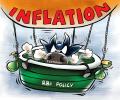
Inflation breached the upper end of the RBI's comfort level of 4 per cent plus-minus two percentage points.

Retail inflation dipped marginally to 6.44 per cent in February, mainly on account of a slight easing in prices of food and fuel items though it remained above the Reserve Bank's comfort level of 6 per cent for the second month in a row. As per the government data released on Monday, the Consumer Price Index (CPI)-based inflation was at 6.52 per cent in January and 6.07 per cent in February 2022. The retail inflation rate for the food basket worked out to be 5.95 per cent in February, marginally lower than 6 per cent in January.

The rupee had lost 52 paise to close at 54.08 against the dollar on Tuesday on heavy month-end dollar demand from importers and corporates.

To minimise risk, invest in a debt fund whose duration matches your investment timeframe.

The next policy meeting will be in mid-June, when the panel will be joined by Stanley Fischer, the former Bank of Israel governor whose nomination to the Fed's board was confirmed on Wednesday by the US Senate.

Titan surged 2.98 per cent, followed by IndusInd Bank, ITC, JSW Steel, Infosys, Tech Mahindra, Tata Consultancy Services and Maruti. Hindustan Unilever, Asian Paints, Bharti Airtel and HDFC Bank were among the laggards.
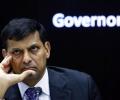
With the 'busy credit season' which witnesses a spurt in loan demand going up, it would be good to lower the rates ahead of it
.jpg)
Raghuram Rajan, who took over as RBI Governor on September 4, is scheduled to unveil on Friday mid-quarter monetary policy review, an event keenly awaited by industry and banks.

The Reserve Bank of India's move to pause its hawkish Monetary Policy stance is on expected lines as high interest rates affect the economic growth, bankers and analysts said.

The central bank and Indian government has reached a "broad consensus" on the composition of a rate-setting panel.

Das favoured shifting the stance of monetary policy from neutral to accommodative to send a clear signal, indicating that more measures could be taken in the near future to boost growth.

From the Sensex pack, IndusInd Bank, Mahindra & Mahindra, PowerGrid and Bajaj Finserve gained up to 2.01 per cent. On the other hand, bellwether stocks such as ITC, Kotak Mahindra, Tech Mahindra and Reliance were the laggards. ITC shares closed the session with a loss of 3.87 per cent lower and Reliance ended 1.92 per cent lower.

The finance ministry has cautioned that global and regional uncertainties and domestic disruptions may keep inflationary pressures elevated in the coming months, warranting "greater vigilance" by the government and the Reserve Bank of India (RBI). "Russia's decision to terminate the Black Sea grain deal, along with dry conditions in major wheat-growing areas, caused a price spike in cereals. Domestic factors like white fly disease and an uneven distribution of monsoon exerted pressure on vegetable prices in India," the ministry said in its latest Monthly Economic Report for July, released on Tuesday. However, the report maintained, the recent price surge in certain food items "is expected to be transitory". "Tomato prices are likely to decline with the arrival of fresh stocks by the end of August or early September.

The market capitalisation of BSE-listed companies soared to an all-time high of Rs 406.52 lakh crore on Monday thanks to a rally in equities where the BSE Sensex climbed over 1 per cent. The 30-share BSE Sensex rallied 941.12 points or 1.28 per cent to finish at 74,671.28. During the day, it zoomed 990.99 points or 1.34 per cent to 74,721.15.

In the backdrop of an over four-decade high inflation, the US Federal Open Market Committee has raised its key policy interest rate by 75 basis points to 2.25-2.50 per cent, anticipating that the increase in the interest rates will be "appropriate". Hiking interest rates typically cool demand in the economy, thereby putting a brake on the inflation rate. The US Federal Reserve in its June meeting too raised the interest rate by 75 basis points, which was the steepest hike since 1994.

The Reserve Bank's rate-setting panel will start its 3-day deliberations on Wednesday amid expectations of yet another rate hike of 50 basis points to check high inflation, in line with similar actions taken by other major central banks, including the US Fed. Based on the recommendations of the Monetary Policy Committee (MPC), the RBI had effected 50 basis points increase in repo rate each in June and August after raising the short-term lending rate by 40 basis points in an off-cycle decision in May. The MPC, headed by RBI Governor Shaktikanta Das, is scheduled to meet during September 28-30.

'Urjit Patel's appointment is a right decision and in the interest of the country.'
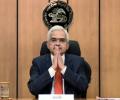
'Even if there is a third wave or a fourth wave, it is hard to see the economy will suffer like that (during the first wave).'

After two surprising, successive rate cuts in January and February 2015, RBI governor Raghuram Rajan decided not to reduce them further in his first policy announcement in the new financial year. Is he playing spoilsport for consumers of homes and cars?

The Reserve Bank of India (RBI) on Friday kept the key repo rate unchanged at 4 per cent in view of rising inflation and faint signs of economic growth amid the gradual lifting of coronavirus related countrywide lockdown.

The panel was set up to suggest ways to reform India's monetary policy.

Rajan's exit will neither affect the RBI's de facto independence nor its working.

Reserve Bank Governor Shaktikanta Das on Wednesday said the decision to tweak policy rates was not in his hand as he himself is driven by the situation on the ground. In April, the Reserve Bank in a surprise move hit the pause button and decided to keep the key benchmark policy rate at 6.5 per cent. Prior to it, the Reserve Bank of India (RBI) was on a rate hiking spree, raising the repo rate by 250 basis points since May 2022.

'The shifts in US involvement in global conflicts and geopolitical alliances could introduce uncertainties.'

Chidambaram said there was no tension between the finance ministry and the Reserve Bank of India.
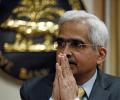
The Reserve Bank on Wednesday increased the benchmark lending rate by 40 basis points (bps) to 4.40 per cent in a bid to contain inflation, which has remained stubbornly above the target zone of 6 per cent for the last three months. The decision follows an unscheduled meeting of the Monetary Policy Committee (MPC), with all six members unanimously voting for a rate hike while maintaining the accommodative stance. While the inflation has remained above the targetted 6 per cent since January, RBI Governor Shaktikanta Das said the inflation print in April is also likely to be high.

'Higher interest rates make gold less attractive as it doesn't generate yield.' 'However, with rates set to fall, the tables are turning for gold.'

'Mrs Gandhi had nothing to do in the day-to-day working of Dr Singh's government.' 'People say Mrs Gandhi's office used to give orders, which is nonsense.'

RBI has cut policy rate thrice during 2015.

The monetary authority said it was worried on three fronts with regard to inflation as well as the economy.

Endorsing Finance Minister P Chidambaram's call to banks to pass on the benefit of rate cuts to customers, RBI Governor D Subbarao on Thursday said the central bank is also "very conscious" of the need to be supportive of economic growth.

The US Federal Reserve's interest rate decision, global market trends and trading activity of foreign investors are the major factors that would dictate terms in the equity markets in a holiday-shortened week ahead, analysts said. Equity markets will remain closed on Tuesday on account of Ganesh Chaturthi. From the global front, interest rate decisions from the Bank of England and Bank of Japan would also influence market trends.

People are availing far more of certain kinds of unsecured loans than was the case before the pandemic. Bank lending for buying consumer durables and funding of credit cards and other personal loans have risen by Rs 6.9 trillion between August 2019 and August 2023, shows a Business Standard analysis of data from the Reserve Bank of India (RBI). These loans are typically unsecured, which means they are provided without collateral.
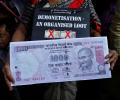
In a big win for the Narendra Modi government, the Supreme Court in a 4:1 majority verdict on Monday gave its stamp of approval to the Centre's 2016 decision to demonetise the Rs 1,000 and Rs 500 denomination currency notes, saying the decision-making process was neither flawed nor hasty.
With retail inflation surprising on the upside, the six-member monetary policy committee (MPC) of the Reserve Bank of India (RBI) is expected to increase the repo rate by 35-50 basis points (bps) in the review scheduled for September 28-30. According to economists, the central bank will continue to focus on bringing inflation down even though economic growth has remained sluggish. Data released by the government on Monday showed that the consumer price index (CPI)-based inflation increased by 7 per cent year-on-year (YoY) in August, thus, staying above the upper tolerance limit of the central bank for all the eight months of 2022.

Global trends, macroeconomic data, and the outcome of the US Fed policy meeting are the major factors that will drive the movement in the domestic equity markets this week, analysts said. "In the upcoming data-centric week, the focus will be on crucial releases, including inflation data from India and the US. "Indian inflation is expected to rise, while US inflation will remain steady.
